The traditional wedding processional order builds toward the bride: grandparents and the mother of the bride, the officiant, groomsmen, bridesmaids, the children, then the bride with her father. Religious and civil ceremonies can change it.
This guide covers only the ceremony walk-in and where people stand. Add it to your wedding planning checklist, and use the wedding day timeline for the schedule of the whole day.
Why the processional runs in this order
A wedding processional is the group of people who walk down the aisle in a set order to mark the start of the ceremony, as The Brides of Oklahoma describes it. The sequence works as a build-up. Each group arrives closer to the couple, and the bride enters last so that every other person is already in place when she arrives.
The same logic explains the groomsmen. They walk in the reverse of the order in which they will stand, so the best man enters last and ends up beside the groom, according to Loverly’s processional guide. Work out the standing line first, then reverse it for the walk. That is easier than planning the walk and hoping the line works out at the front.
The traditional order, step by step
The table sets out the usual sequence for a Christian-style ceremony with a full wedding party. Treat it as a default to adapt, not a rulebook, because sources open the procession slightly differently.
| Step | Who walks | Placement or cue | Planning use |
|---|---|---|---|
| Opening | Grandparents, when present, with the groom’s paternal grandparents entering first; the mother of the bride | The mother of the bride’s entrance is the signal that the processional is about to begin | Tell musicians and ushers which entrance marks the start. |
| Officiant | Walks to the altar and stands | Waits at the altar for the rest of the party | Agree whether the officiant walks the aisle or enters from the side. |
| Groomsmen | The one who will stand farthest from the groom goes first; the best man goes last | The best man takes the closest spot behind the groom; the groom enters from the side of the venue near the right side of the altar | Rehearse the line so each person knows the spot to walk to. |
| Bridesmaids | One by one, with the maid or matron of honor last and typically alone | Line up with the bride, to the left of the officiant | Space the walkers so the aisle never looks crowded. |
| Flower girl and ring bearer | The final members of the party before the bride | Go up front or join their parents, depending on age | Cue them from the maid of honor’s exit. |
| Bride | Escorted by her father, who stands to her right | Reaches the groom at the altar | Give the music a clear change for her entrance. |
Details in the table come from The Brides of Oklahoma and Loverly.
Who walks down the aisle first
Under the traditional approach, the first person down the aisle is the mother of the bride, whose entrance signals the start. Where grandparents are present, Loverly says they usually kick off the proceedings, with the groom’s paternal grandparents entering first. If grandparents attend, let them open and have the mother of the bride follow, so the cue for the music still comes from her.
A modern alternative is to have the officiant walk down the aisle first. That suits a ceremony where nobody is being honored with an opening entrance and you want a simple, clear start.
The final entrance
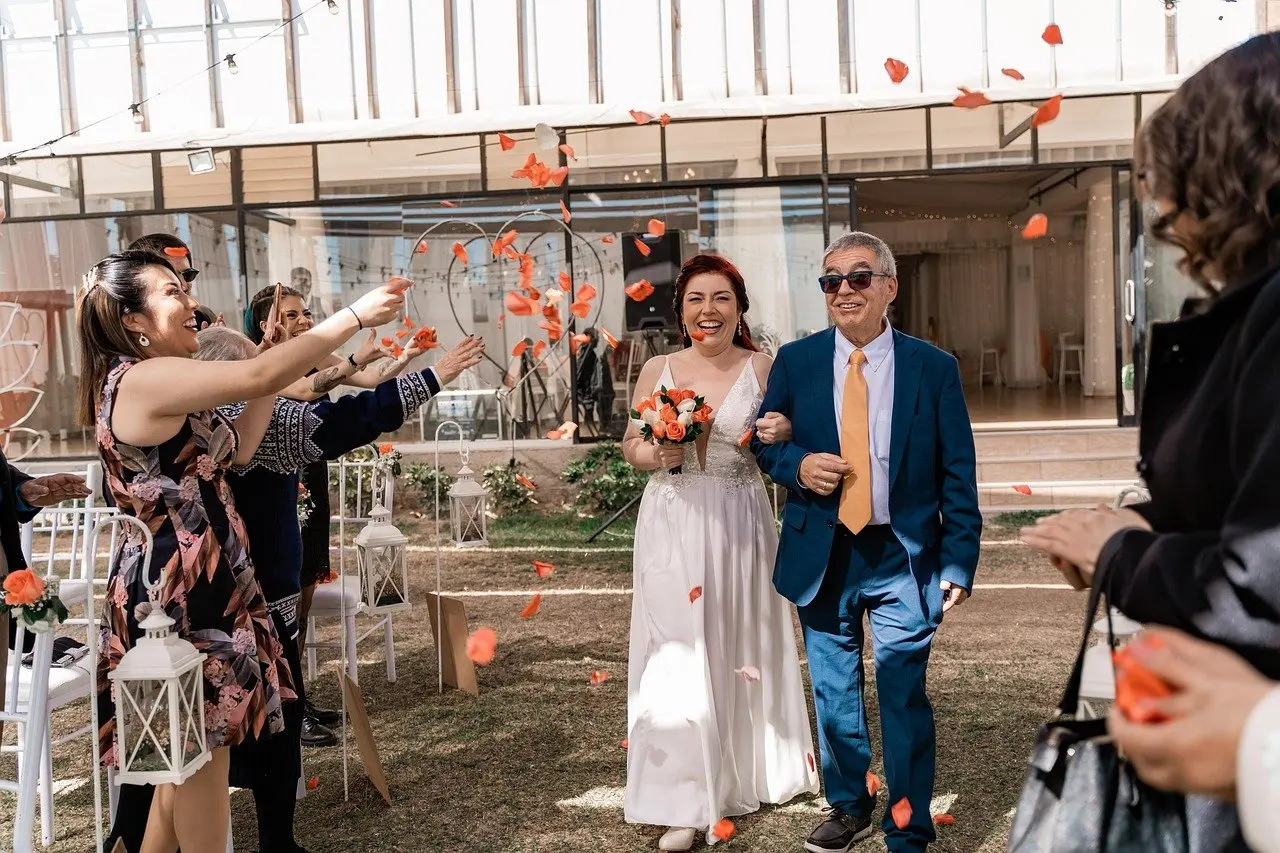
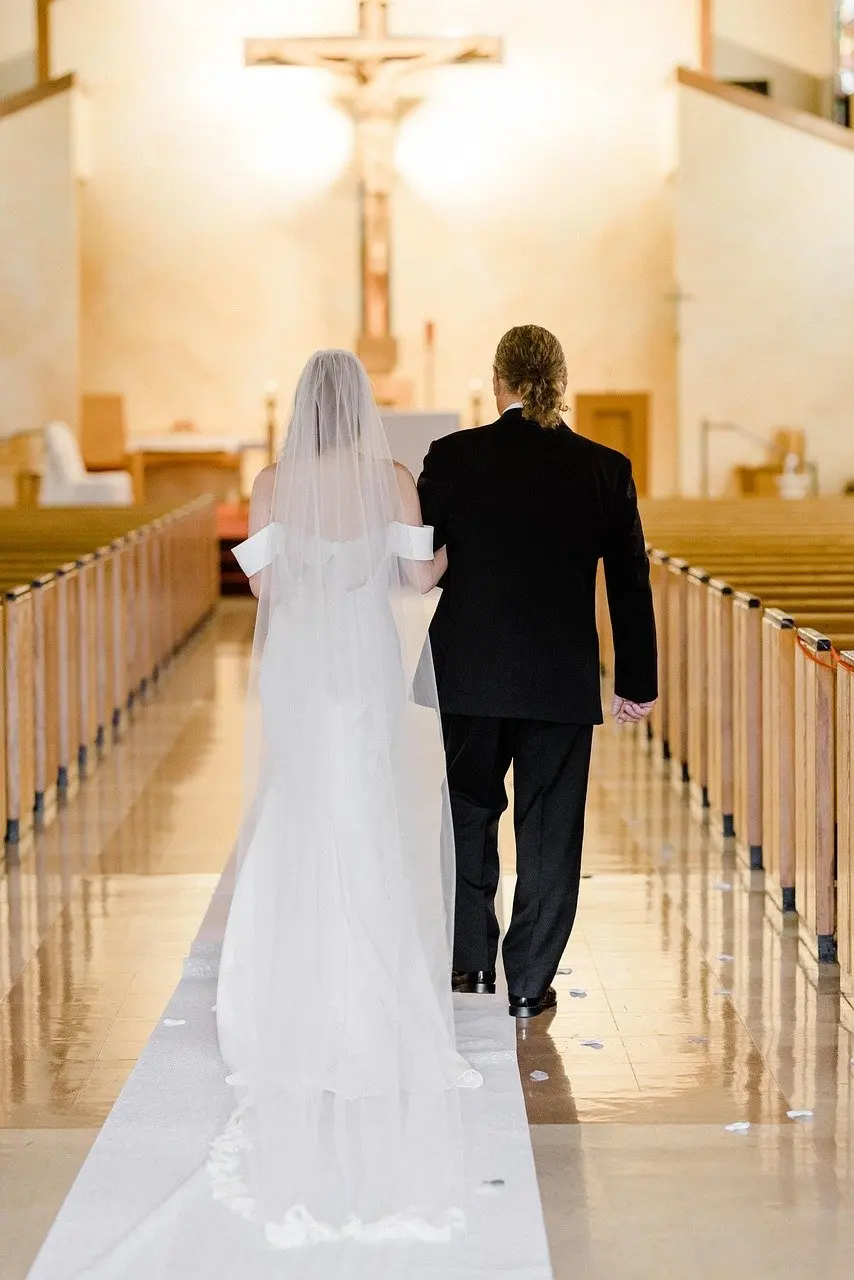
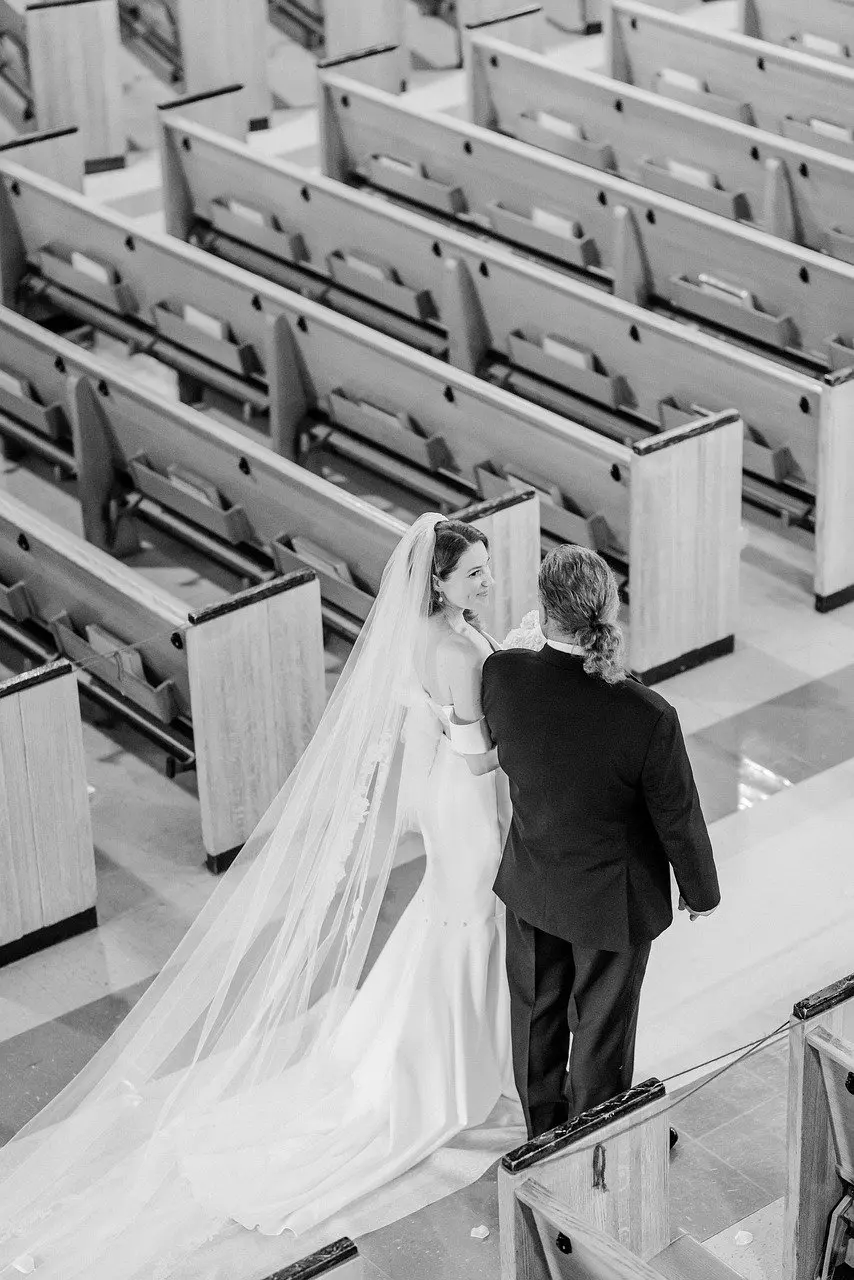
The bride walks last, with her father to her right. Children and the maid of honor are the final cues before her, so the aisle is empty for her entrance. A clear gap in the music helps guests turn and look.
Where everyone stands at the altar
The standing plan is the mirror of the walking plan. The simplest traditional layout puts the bride and bridesmaids to the left of the officiant and the groom and groomsmen to the right, according to a venue guide to the processional. The groom’s side is traditionally the right side of the altar, near his family.
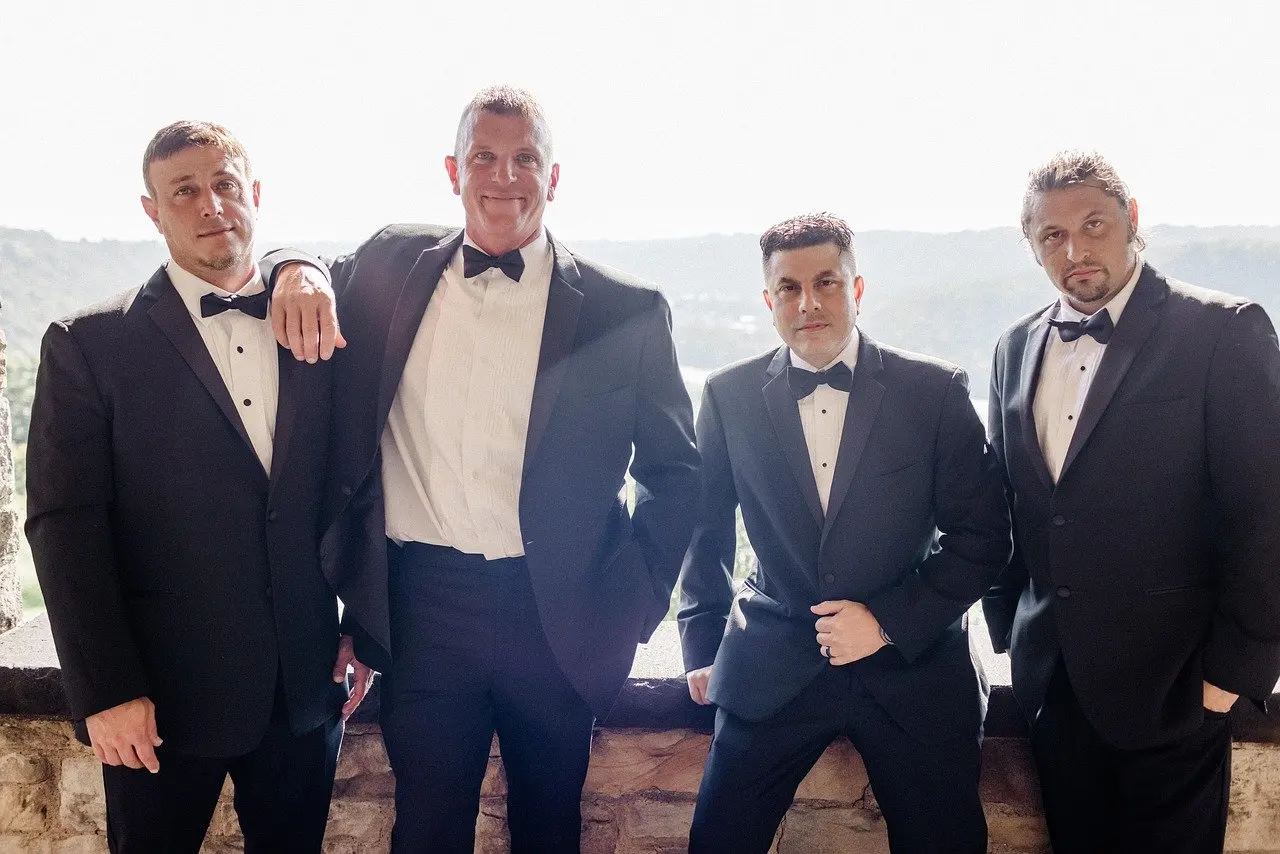
Within each line, the person closest to the couple is the one who walked last. The best man stands next to the groom in the closest spot behind him, and the groomsmen who walked first end up farthest away. For the bridesmaids, the maid or matron of honor enters last and so stands nearest the bride.
The officiant’s place
The officiant stands at the altar between the two lines. Some officiants do not walk the aisle at all. Loverly notes that they often enter from the side of the ceremony site, and the Greenock Manor guide instead puts the officiant first out the door. Either works, and what matters is that the officiant is in position before the groomsmen arrive.
Flower girl and ring bearer
The flower girl and ring bearer walk immediately before the bride. Where they go afterward depends on their age. Very young attendants are not expected to stand up front, and the venue guide says they join their parents and are seated. Older children can take a spot at the end of their side’s line. If young attendants will sit with their parents, reserve those seats when you work out how to make a wedding seating chart.
Religious and secular variations
Religious traditions change who walks and who waits. In a Christian ceremony, the bride is escorted by her father while the groom waits at the front with the officiant. The groom does not process, which also simplifies the groomsmen’s walk.
In a Jewish ceremony, both of the groom’s parents escort him down the aisle, with his father on the left and his mother on the right, as Loverly describes. Check with the officiant before settling the order, because the tradition decides who walks with whom.
Civil and other non-religious ceremonies are the most flexible. Loverly states there are no set rules for how the processional plays out in non-religious nuptials, so the couple decides the entrance order. Couples in that position can keep the traditional build-up, put the officiant first, or let both partners walk in together. Keep a clear final entrance, since that is the moment guests expect.
Ceremony order of events and planning the walk
The order of events starts before anyone walks. The Greenock Manor guide has background music begin 30 minutes before the ceremony start time, and then the officiant, wedding party, children and bride enter in the sequence above. The recessional is the exit that follows the ceremony, and the processional order informs it because the couple leaves first and the party follows.
Settle the walking order at the rehearsal, with the officiant present. Write the order down as a single list, name the song cue for each group and give the list to the musician or DJ. Keep this sheet separate from the day’s schedule, which belongs in the wedding day timeline.
Frequently asked questions
What do the flower girl and ring bearer carry?
The flower girl may carry a basket full of petals to scatter as she walks. The ring bearer carries the wedding rings tied to a small pillow, which is handed to the best man.
How many songs does the processional need?
The Greenock Manor guide considers two songs sufficient and easier for the processional, with a third optional. Use one for the wedding party and a different one for the bride’s entrance.
Does a military wedding change the order?
The difference falls at the recessional. In a military wedding, per Loverly, the just-married couple exits under an arch of drawn swords.